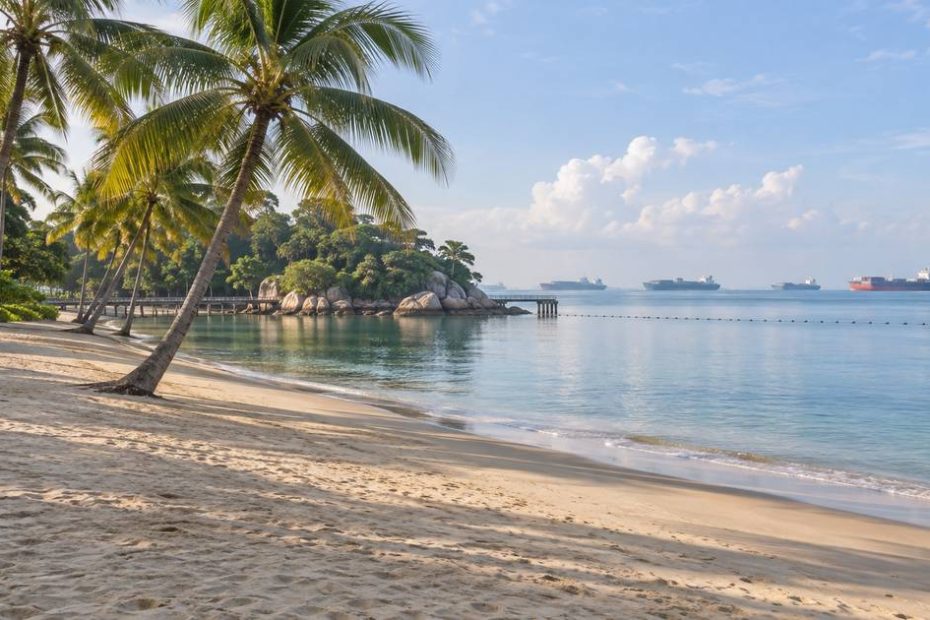
In short: Sentosa is a resort island off Singapore’s southern coast, about 500 hectares in size. Once a British military island called Pulau Blakang Mati, it was renamed Sentosa (“peace and tranquillity” in Malay) in 1970 and has been developed as a resort since 1972. Visit for its three beaches, theme parks, forts and nature trails.
Sentosa is the easiest island escape from central Singapore: it is linked to the mainland by road, a boardwalk, a monorail and a cable car. This guide covers its history, its beaches and the practical details of a visit.
From Blakang Mati to Sentosa
The island was known as Pulau Blakang Mati from as far back as the 1600s; the name is usually translated as “the island behind which lies death”, possibly because of pirate battles (Roots, National Heritage Board). From the 1880s it was an important British military base, with forts built to protect the southern shipping lanes (National Museum of Singapore). During the Second World War it was used as a Japanese prisoner-of-war camp (Wikipedia).
After the British military bases closed, the island was returned to the Singapore government in 1967 (National Library Board). In 1969 the Tourist Promotion Board ran a contest to rename it, and in 1970 it became Sentosa, Malay for “peace and tranquillity”. By 1972 S$124 million had been set aside to develop the resort, and the Sentosa Development Corporation was set up on 1 September 1972 to run it (Roots, NLB). Land reclamation has since grown the island from about 280 hectares to about 500 (CNN).
The beaches
- Siloso Beach on the west side is the liveliest, with beach bars, volleyball and water sports.
- Palawan Beach in the middle is family friendly, with a suspension bridge to a small islet.
- Tanjong Beach at the eastern end is the quietest, popular for sunset.
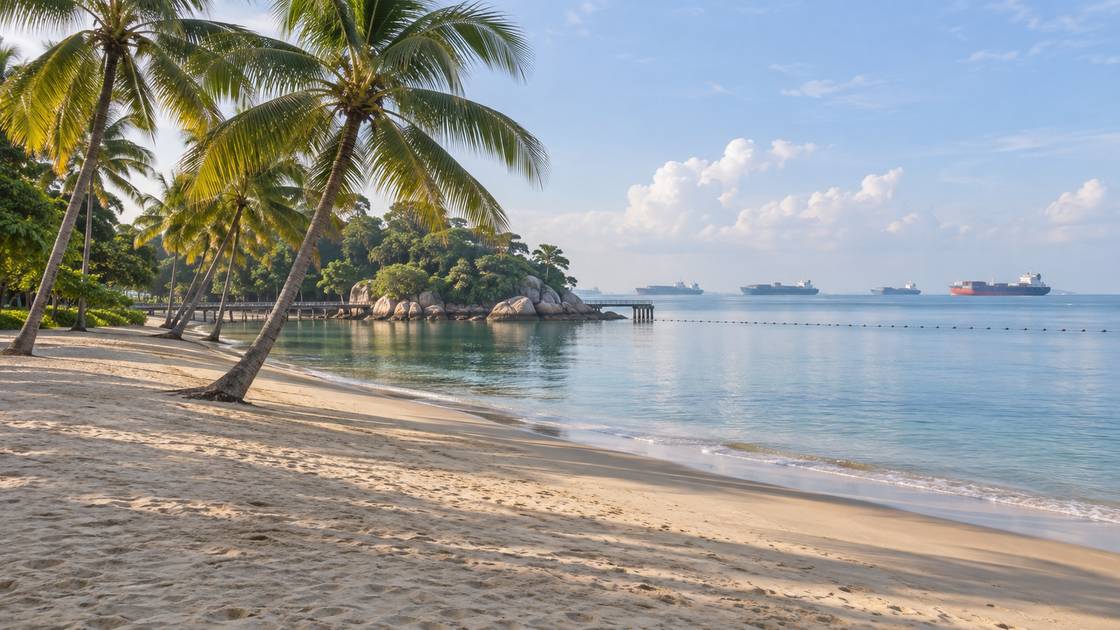
The beaches are man-made and face one of the world’s busiest shipping straits, so expect views of ships at anchor rather than open ocean. Swim only in marked areas and watch for flags.
What else to see
- Fort Siloso: a preserved coastal fort with tunnels and gun emplacements from the island’s military past.
- Resorts World Sentosa: an integrated resort with Universal Studios Singapore, an aquarium, hotels and a casino.
- Nature trails: forest paths and lookout points across the island.
- The cable car: the Singapore Cable Car, first built in 1974, links Sentosa with Mount Faber (Wikipedia).
Getting there
- Sentosa Express: a monorail from VivoCity, next to HarbourFront MRT station.
- Sentosa Boardwalk: a covered walkway from VivoCity, about 15 minutes on foot.
- Cable car: from Mount Faber or HarbourFront, with views over the harbour.
- Taxi, ride-hailing or bus: by road across the causeway bridge.
Check the official Sentosa website for current fares, island admission charges and opening hours, as these change.
Tips for a day on Sentosa
- Arrive in the morning to avoid the strongest midday sun and the afternoon crowds.
- Free island transport links the main areas; check routes on arrival.
- Weekends and school holidays are busy. Weekdays are quieter.
- Bring water, sunscreen and an umbrella for sudden showers.
Common questions
What does Sentosa mean?
Sentosa is Malay for “peace and tranquillity”. The name was chosen in a public naming contest and adopted in 1970.
Which is the best beach on Sentosa?
It depends on what you want: Siloso for activity and beach bars, Palawan for families and Tanjong for a quieter afternoon.
Can you visit Sentosa in a day?
Yes. It is close to the city centre, and a day is enough for a beach and one or two attractions.